Dec 17, 2025
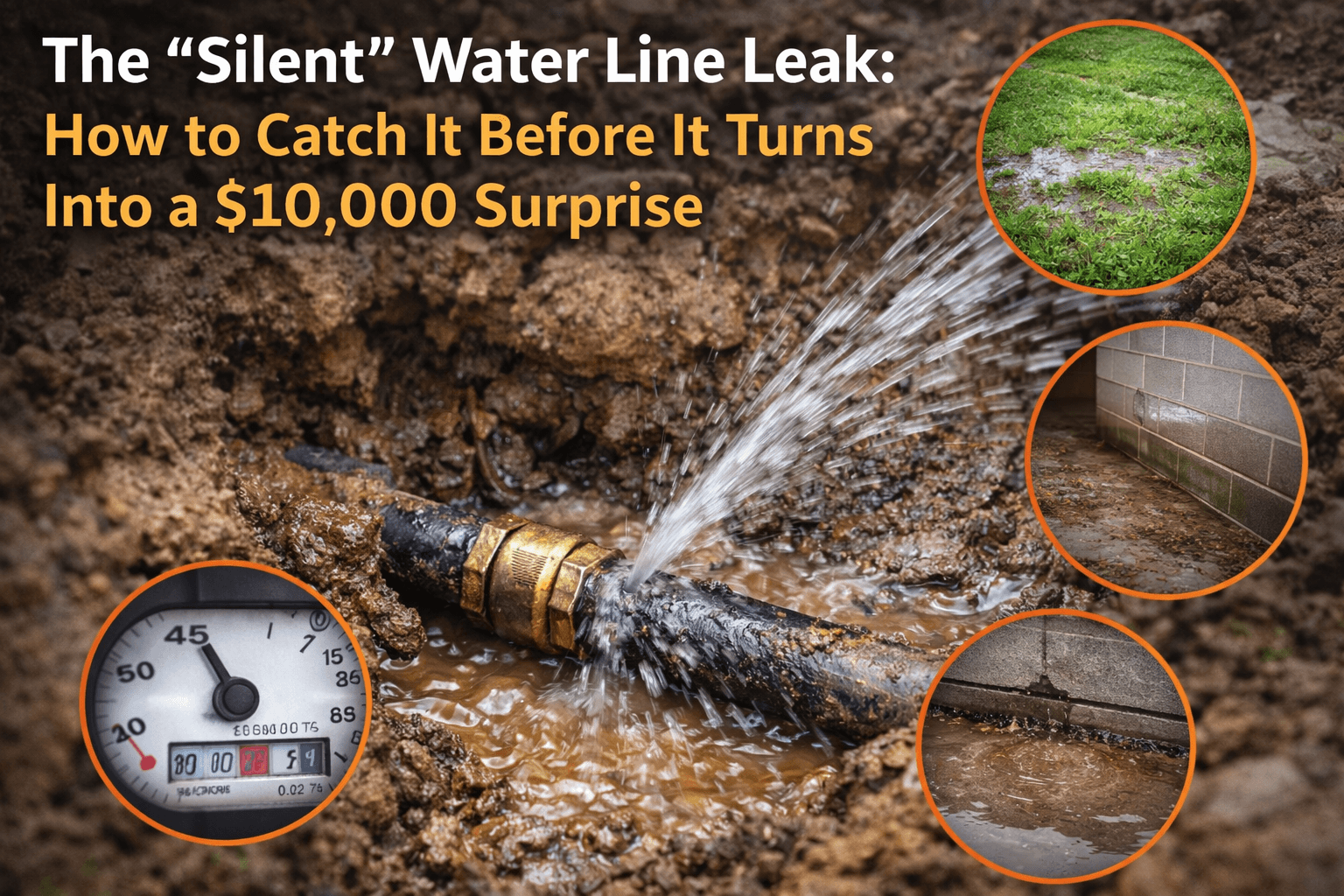
The “Silent” Water Line Leak: How to Catch It Before It Turns Into a $10,000 Surprise
Water line leaks are different than plumbing leaks
A leaky faucet is annoying. A leaking underground water service line is expensive because it quietly:
wastes thousands of gallons,
saturates soil and undermines surfaces,
and can fail catastrophically when you least want it.
The worst part? Many water line leaks don’t show up as obvious puddles. They show up as patterns.
9 signs your water service line may be leaking
1) Your bill jumps without lifestyle changes
This is the classic, but most people explain it away (“maybe the rates changed”).
2) Your water meter moves when everything is off
Turn off all fixtures. Watch the meter. Movement usually means leakage.
(If you have an irrigation system, isolate that too.)
3) You hear faint water flow when nothing’s running
Especially near the main shutoff.
4) Pressure drops or fluctuates
A line leak can reduce pressure, especially during peak neighborhood usage.
5) Discolored water after disturbances
Sometimes leaks pull in sediment depending on conditions.
6) One persistently wet patch in the yard
Even when it hasn’t rained.
7) Soft spots or sinking near the path of the line
Soil washout can cause settling.
8) Cracks in driveway/walkway that “feel new”
Not proof by itself, but a clue when combined with other signs.
9) Water in the basement near the service entry
Sometimes the leak is near the foundation where the line enters.
The right way to locate a leak (without digging blindly)
A professional approach often includes:
meter verification (to confirm it’s not inside plumbing),
pressure testing (to quantify loss),
line tracing (to map the route),
and targeted locating methods to narrow the dig area.
Random excavation is expensive. Good contractors act like investigators: confirm, isolate, locate, then fix.
Repair vs replacement: the decision that saves people the most money
Repair is often best when:
the leak is localized (a fitting, a short damaged section),
the pipe material is otherwise sound,
and access is reasonable.
Replacement is often best when:
the line is old and failing in more than one spot,
the material is prone to repeated issues,
or the repair cost is close to replacement cost.
A smart contractor doesn’t sell you “new everything.” They show you the tradeoffs and help you pick the option that reduces total lifetime cost.
Why water line repairs can get expensive (and how to control that)
The cost usually isn’t the pipe. It’s:
locating and exposing the right spot,
depth and soil conditions,
surface restoration (driveway, landscaping),
and making the repair to code with proper fittings and protection.
How you control cost:
confirm it’s not an interior leak first,
get a precise location before major excavation,
and choose the repair approach that avoids repeated work.
What you can do today (fast)
Turn off all water → check meter movement
If it moves: isolate irrigation (if you have it) and check again
If still moving: treat it as an underground leak until proven otherwise
Book a professional locate/diagnosis so the fix is targeted
The goal is simple: turn a scary unknown into a measured plan.